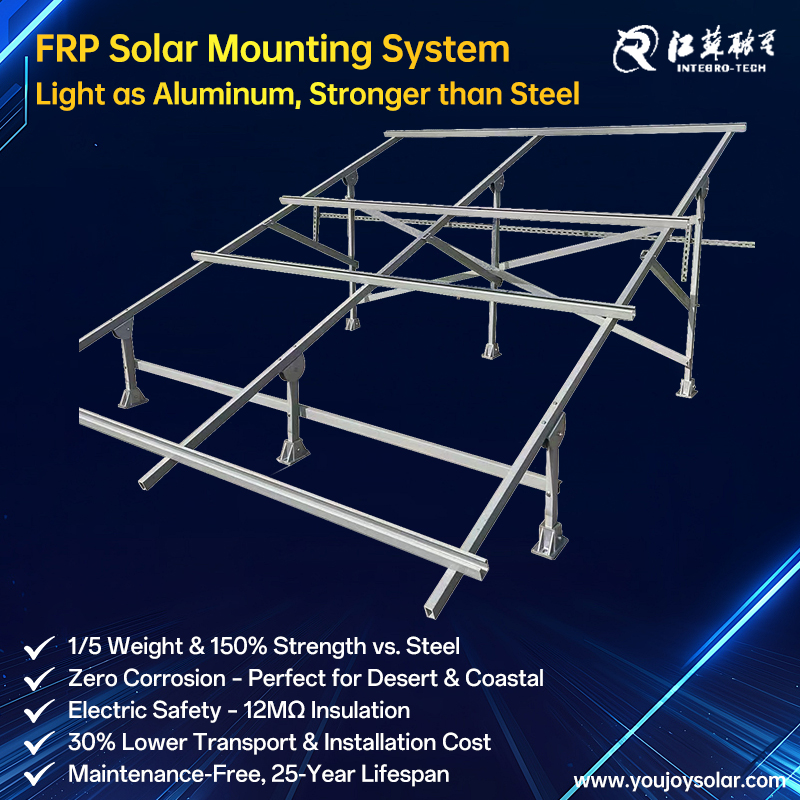
Selecting the right solar mounting system for offshore applications requires addressing unique marine challenges that demand specialized solutions. Traditional materials fail in saltwater environments, making material choice the most critical decision.
Marine Environment Challenges:
Offshore solar installations face constant saltwater exposure, high humidity, and extreme weather conditions. Standard galvanized steel corrodes within 3-5 years, requiring expensive replacements and causing system downtime. Structural integrity must withstand 60m/s wind speeds and wave impacts while maintaining alignment precision.
Key Selection Criteria:
Corrosion Resistance: Seek materials with 3000+ hours salt spray certification
Structural Strength: Verify wind load certification for your specific location
Weight Optimization: Lighter systems reduce installation complexity and costs
Maintenance-Free Design: Zero maintenance requirements over 25-year lifecycle
FRP Composite Advantages:
Built-in corrosion resistance without protective coatings
High strength-to-weight ratio for easier installation
25-year performance guarantee in marine environments
Verification Steps:
Request third-party salt spray test reports (3000+ hours)
Validate structural calculations for your project’s specific conditions
Review documented case studies from similar marine installations
Calculate total cost of ownership including maintenance savings
Next Steps:
Download our Offshore Mounting Selection Guide for detailed technical specifications and comparison tables. Request project-specific engineering analysis to ensure compliance with marine environment requirements. Schedule a technical consultation to discuss your specific offshore challenges and solutions.
Choosing the right offshore mounting system ensures project longevity, reduces operational costs, and maintains energy production efficiency in demanding marine conditions.